

groundviews is a Sri Lankan citizen journalism initiativeregister here.login.find out more
inicio mail me! sindicaci;ón

Thank you, Maori Party in New Zealand


Hon.Te Ururoa Flavell
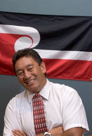
Hon. Hone Harawira
Hon. Hone Harawira

Hon.Te Ururoa Flavell
Māori Party Whip
Hon. Hone Harawira
Foreign affairs spokesman,
Maori Party

This is written in appreciation of The Maori Party’s decision to block the motion expressing concern about the Sri Lankan “humanitarian situation”; that is, the fighting against LTTE terrorists by the Government forces of Sri Lanka. The reason given by the Maori leaders is very valid: “Because it gives equal weight to the Sri Lankan Government and the Tigers”.

The New Zealand Herald on Wednesday 29 April 2009 reported that: “The Maori Party has been attacked as ‘disgusting’ for blocking a parliamentary motion yesterday… in the name of Progressive [Party] leader Jim Anderton.” It is also reported that “Labour associate foreign affairs spokesman Grant Robertson said he was disappointed that the Maori Party blocked the motion.”

The motion read:

That this House, notes its deep concern at the dire humanitarian situation in Northern Sri Lanka and calls upon both the Sri Lankan Government and the Liberation Tamil Tigers of Eelam (LTTE) to immediately stop hostilities to allow those civilians in the combat zone to move to safety, condemns all acts of violence and intimidation which are preventing civilians from leaving the conflict area, and calls on both sides to respect international humanitarian law and to protect and assist the civilian population in combat zone, as in the internally displaced persons (IDP) camps.

And Mr Anderton says “No one is being asked to take sides…” and asks “What on that list could any reasonable person be opposed to?”

The answer is this motion implies that the democratically elected Sri Lankan government does not care about its citizenry. It is biased — this means Mr Anderton and his friends side with LTTE terrorist supporters. Mr Anderton and his allies seem ignorant of recent developments in the West regarding this situation. For example: the editorial of the Washington Times on 26 April 2009 says, “The Tamil Tigers have purposefully created the conditions for a humanitarian crisis and deserve neither amnesty nor mercy. There are ways to help resolve this standoff that will not allow the Tigers to snatch victory from the jaws of defeat, such as providing military and intelligence support for pinpoint strikes against the terrorist leadership. Failing that, the Obama administration [so as other administrations] should mind its own business. The Sri Lankans are winning; we should let them finish the job.”

Also United Nations Ambassador Claude Heller of Mexico speaks to the media following a Security Council meeting said “We demand that the LTTE immediately lay down arms, renounce terrorism, allow a UN-assisted evacuation of the remaining civilians in the conflict area, and join the political process,” The council president, speaking on behalf of the 15 members, said they “strongly condemned the LTTE, a terrorist organization, for the use of civilians as human shields and for not allowing them to leave the area.”

What Mr Anderton and his friends have not realized is that the LTTE is banned in more than 30 countries as the most ruthless terrorist group in the world. Pressure is now at its peak to release the civilians who have been used as human shields by the LTTE to delay their final defeat in this battle: the Ealam war IV. It is a grave mistake to be carried away by the powerful worldwide LTTE propaganda and believe that this terrorist outfit really cares about even their own Tamil people.

Hone Harawira, the foreign affairs spokesman for the Maori Party, asked the New Zealand Government to reinforce the message that the Sri Lankan Government needed to exercise restraint against the Tamil Tigers which is now in its last enclave. The report that “Waiariki MP Te Ururoa Flavell loudly objected to Mr Anderton …” implies that the Maori leaders have done their homework comprehensively and carefully and have taken an unbiased stance bravely.

When our award-winning film-star/producer/director Jackson Anthony visited New Zealand last year, he said that the two treaties the British Government signed with the leaders of Sri Lanka in 1815 and with Maori leaders in Aotearoa /New Zealand in 1840, have a lot of similarities. It is well known here in New Zealand that the Treaty of Waitangi (the place in New Zealand where the Treaty was signed (similar to Kandy in Sri Lanka) had different versions in the English and Maori languages. Prof. Nalin de Silva mentioned in a recent TV programme that certain clauses in the Kandian Treaty were never observed by the British Governors. He said that the Sinhalese were not “conquered” but in fact were deceived by Western colonialists, as were the Maori people. Therefore, it is very interesting to learn that the Maori Party is highly aware of the situation in Sri Lanka, acting independently and impartially, which demonstrates their maturity in politics and formulating foreign policies.

Thank you, Maori Party! The GoSL should convey its gratitude to Maori Party soon.

Print this post
902 have read this this article so far. You may also find these articles interesting:
  • Jathika Hela Urumaya (JHU) on whether the LTTE is really finished and the war over in Sri Lanka Vikalpa Video asked the spokesperson of the Jathika Hela Urumaya (JHU) Nishantha Warnasinghe for his opinion on whether the LTTE was really finished and the war over in Sri Lanka. This video was viewed over 4,000 times in less than 24 hours after it was uploaded to Vikalpa’s YouTube Channel. Nishantha’s opinion in Sinhala: Transcript in... Groundviews, May 7, 2009
  • Government and LTTE differ on value of life by Global Citizen for Banyan News Reporters Colombo, Sri Lanka: Researchers at the Sri Lankan Ministry of Defence and their counterparts at the LTTE Humanitarian Research Institute at Puthukkudiyirippu (formerly based in Kilinochchi and which did not at any time have a hospital) have been competing for months to produce the most accurate calculation of the value... Banyan News Reporters, February 23, 2009

| Share this article on Facebook

True Sri Lankan said,

May 1, 2009 @ 4:30 am

The 11th hour 59th minute of LTTE Terrorists reveals more and more of who are for LTTE terrorists and who are for the true sons and daughters of Sri Lanka including the suffering Tamils in the north and the east of Sri Lanka.
Most of the so called world powers in the UN Security Council and the so called peace negotiators try hard at this moment to extend a life line to LTTE Terrorist leaders. Even though LTTE is banned in their countries, still they consider there is a so called ethnic problem in Sri Lanka and terrorist “Prabakaran” is the only person who can sort this out and not the majority of Sri Lankans. Therefore “Prabakaran” is a freedom fighter for them.
They always show that they believe faithfully the Tamilnet and all other LTTE propaganda and demonstrations of supporters of terrorist LTTE who always lied. They do not consider what the people elected responsible Government of Sri Lanka says to them. This shows the true faces of their hypocrisy.
As “Saliya” says, they have shown their double standards in the history both in Treaty of Waitangi (New Zealand) and in Treaty of Kandy (in Sri Lanka). No doubt that all the peace loving Sri Lankan should convey their gratitude to Maori Party of New Zealand.
For those why stick to LTTE propaganda machinery, specially the “Tamilnet” here is the “Sinhala.net – http://www.sinhala.net/ “ to see the true picture of the conflict.
To see what the Sri Lankan Defence Sectary, Gotabaya Rajapaksa), said on April 29 to the visiting British Foreign Secretary David Miliband’s and French Foreign Minister, Bernard Kouchner rejecting a call for a ceasefire, please visit: http://www.sinhala.net/localnews/SinhalaNet_Full_News.asp?ID=4873

Believe a person who is plain-spoken.

Sair said,

May 1, 2009 @ 10:45 pm

All this article says is that we are willing to kill to attain peace. Kill terrorists and kill citizens.

Saliya C A said,

May 2, 2009 @ 12:39 pm

No Sir, it doesn’t say to kill citizens or even terrorists. It exposes the double standards of the western so called humanitarians. They, the neo colonists think that Sri Lanka is a colony, a bankcrupt third world country, Sinhalese and Tamils are premitive tribes and we do not know how to solve problems.

It was US defence secretray who said the price is worth when he was asked about half a million deaths of children in Iraq.

I am against any killing, but I believe that people should protect the democratically ellected government to safeguard the the citizens aganst terrirism.

Kichchi said,

May 6, 2009 @ 6:46 am

“They, the neo colonists think that Sri Lanka is a colony, a bankcrupt third world country, Sinhalese and Tamils are primitive tribes and we do not know how to solve problems.”

An earnest APPEAL to all those who strive for sustainable peace in Sri Lanka
“The lack of engagement and communication, in turn adds to the sense of estrangement. This is not in the interests of either side, particularly the Sri Lankan people who yearn for peace, a just solution to the ethnic conflict and the hope of prosperity at least for their children.” – Jehan Perera
With the above end in view please spare a part of your valuable time to ABSORB the views submitted below.
Too much of time has been wasted in discussing the origins of the problems and the paths taken by various persons to solve the problems in the ways they believed as the best. The problems have grown and evolved and twisted by many to suit their way of thinking.
So, it is high-time we start thinking in terms of a solution that would address NEARLY ALL THE PROBLEMS rather than continue to criticize other people for their “faults”.
Failures are the pillars of success. We have learned a lot of things through experience. With the experiences gained we will have to work for a change of heart not just a change of mind of the people in the country.
“People who value democracy, equality and equity, needs to pressure the Sri Lankan state to take immediate action towards a meaningful and just power sharing arrangement. That is the only way to ensure security and the dignity of the peoples of Sri Lanka. If peaceful coexistence through power sharing is not achievable, the only other solution that would be available will be secession” so said Mr. Lionel Bopage, former Secretary of the JVP.
There is a vast difference in the policy and thinking of the ORIGINAL JVP to which Mr.Lionel Bopage belongs and the policy of the present JVP.
A new concept that moves towards a meaningful and just power-sharing arrangement and which is a great deviation from the usual thinking of the meaning of the word “devolution” is given below for the comments of everyone.
Many, who call themselves as ‘moderates’ and advocating a “Unitary State” in principle, are not willing to consider this concept which gives a certain degree of ‘power’ with ‘responsibility’ to everyone including the poor and voiceless silent majority in the country and not excluding the so-called “minorities” while still maintaing the “character” of a “Unitary State”
Now, one word, for those who are actually and sincerely interested in fostering a united country by supporting “devolution” as a means to achieve sustainable peace, please avoid thinking in terms of “devolution” and instead please try to think in terms of “sharing” of powers, rights, duties and responsibilities that cannot be taken back at any time by any government or individual by any method.
The best political solution to address many of the problems faced by many sections of the society – particularly the poor, the politically weak and the “minorities” who do not carry any “political weight” – would be to DILUTE the powers of all elected representatives by separating the various powers of the Parliament and empowering different sets of people’s representatives elected on different area basis to administer the different sets of the separated powers. It has to be devolution HORIZONTALLY where every set of representatives would be in the SAME LEVEL as equals and in par and NOT VERTICALLY where one set of representatives would be above (more powerful than) the other, which is the normal adopted practice when talking of devolution, in this power-hungry world. It is because of “devolution” being evolved “vertically”, we have all the trouble in this power-hungry world. So, for sustainable peace it should not be the present form of “devolution” but “dilution of powers” or “sharing of powers” in such a way that no single or set of peoples representatives – other than the common people, the voters themselves – is superior to another. This system would eradicate injustice, discrimination, bribery and corruption – the four pillars of an evil society – and help to establish the “Rule of Law” and “Rule by ALL” for sustainable peace, tranquility and prosperity and a pleasant harmonious living with dignity and respect for all the inhabitants in the country. Everyone must have “equal” powers, rights, duties and responsibilities and most importantly everyone should be deemed “equal” before the law not only on paper but also practically – be it the Head of State, The Chief Justice or the voiceless poor of the poorest in the country.
Since all political and other powers flow from the sovereignty of the people, it is proposed herein that these powers be not given to any ONE set of representatives but distributed among different sets of representatives (groups) of the people elected on different area basis (village and villages grouped) to perform the different, defined and distinct functions of one and the same institution – the Parliament – like the organs of our body – heart, lungs, kidneys, eyes, nose, ear etc. – performing different and distinct functions to enable us to sustain normal life.
A detailed version of the concept, which is quite long is available for discussion by interested individuals with an aim to change the hearts not just a change of mind of the citizens of this country who aim to preserve a UNITARY form of Government with every section of people from every part of the country PARTICIPATING in the GOVERNANCE OF THE COUNTRY in a practical and meaningful way. In a way it may be termed “participatory democracy”. In this system the country is NOT DIVIDED but the “powers of governance’ of the Parliament is separated and administered COLLECTIVELY by different sets of peoples representatives.
The system suggested is neither “the federalism” for which “Thanthai Chelva” worked hard through non-violent means for nearly thirty years nor a “Two State Solution” for which the LTTE is fighting through violence means for more than thirty years. It is a combination of both and is between both. The solution can be compared to the policy of the EPDP – a partner in the government – “self-governance at regional level and collective governance at the centre”. The main difference in my suggestion and that of the EPDP is that my suggestion is for sharing of power horizontally and EPDP’s suggestion is for sharing power vertically. Give and Take is the best policy. Rule or control your “self” and allow everyone to rule themselves.
LIVE AND LET LIVE

IF THERE IS A WILL, THERE IS A WAY

Kichchi said,

May 8, 2009 @ 6:13 am

An Article by Woodrow Wilson is humbly submitted for the kind perusal of the Maori Party of New Zealand and their supporters to know the background for today’s situation in this bountiful country known as Sri Lanka.

Historical background
“The right is more precious than peace.”
-Woodrow Wilson
When a country is being ravaged by war, an account of the events and reasons which caused it is topical and calls for no apology or explanation.
There appears to be a general misinformation concerning the civil war in this island. It is often repeated, particularly in the information media that the Tamils are fighting for a separate state because they are discriminated against in education and employment opportunities by the majority Sinhalese. It is not true. No people ever have recourse to such a serious remedy as armed warfare against the state to correct discrimination in education and employment. While it is true that such discrimination provoked discontent and unrest among the Tamil youth, the real causes which led to their taking up arms and fighting a war for their separate state lie far deeper in the political and social history of the island more particularly in the Tamil-Sinhalese conflicts which surfaced during the last few decades of British rule and intensified after its withdrawal.
The dawn of the 17th century saw the ships of the seafaring nations of Europe appear in the Indian Ocean waters. They were attracted to the island by the cinnamon trade of Ceylon. They found a prosperous Tamil kingdom in the North and East of Ceylon which has existed for more than five centuries. According to Prof. G.C. Mendis, a Sinhalese historian, “It survived the conquests of the Pandiya, the Sinhalese and the Vijaya Nagara rulers, and came to an end only in 1621 when it was conquered by the Portuguese. The same invasion compelled the Sinhalese to move southwards leaving the ancient centers of Anuradhapura and Polonnaruwa as no-man’s land.”
The Portuguese rule over the Jaffna and Kotte kingdoms was short lived. The Dutch conquered them from the Portuguese and established their rule until the close of the 18th century when the British ousted the Dutch. For the entire duration of the Portuguese and Dutch occupation of the Jaffna and Kotte kingdoms’ territories the occupying powers had maintained separate administrations in the respective territories. The people were contained in their respective territories and the Tamil –Sinhalese animosity had no chance to show up. The British continued that system in the beginning even with regard to the newly annexed Kandyan kingdom territory.
Soon after the Colebrook unification of the conquered territories in 1833, the British divided the island into 9 provinces for their administrative convenience. In so doing, they recognized the Tamil ethnic character of the territory and population of the old Jaffna Kingdom and ensured its continuity by carving out 2 separate provinces out of the territory where the population would not be mixed but entirely Tamil speaking. They are the northern and eastern provinces, now recognized as the NorthEast province consequent to the Indo-Sri Lanka pact of 1987, which among other things, took cognizance of the historical contiguity of the Tamil habitat and paved the way for the current provincial councils set up. Ironically, the provincial council system which was principally introduced to provide an asymmetrical devolution to the Tamil habitat, is now effectively functioning in all parts of the island with elected representatives save the NorthEast which is defunct.
From the time British contemplated full independence to Ceylon commencing from mid 19th century until the mid of the 20th century there always were haggling between the Tamil leaders and their Sinhala counterparts in arriving at a consensus in sharing power in the new formation.
In the 1920s Sir. Pon. Arunachalam laboured hard to bring all the splintered Sinhalese political groupings and the Tamil associations under the umbrella of one common national organisation called the Ceylon National Congress(CNC) to press for constitutional reforms from the British Government on the understanding that the benefits of the reforms would be shared by both the peoples in an equal partnership. When the time came to formulate demands, the Sinhalese leaders went back on their undertaking and used their majority in numbers to force the Tamils and the Congress President Sir. P. Arunachalam to leave the Congress.
A Sinhalese delegation of prominent leaders went all the way to Jaffna to meet with Tamil leaders and negotiate for an agreed common demand to be presented to the British concerning the basis of legislative representation. The resulting agreement was called the “Mahendra pact”. It was repudiated in due time by the Sinhalese leaders on the ground that the name of their organisation has since been changed.
Important leaders representing the pan- Sinhalese CNC entered into a similar agreement with Sir. Pon. Ramanathan, leader of the Tamils, to be placed before the Royal Commission under the Chairmanship of Lord Donoughmore which was due to visit Ceylon. While giving evidence before the Commission, however, noting that the Commissioners were inclined against the principle of communal representation advocated by the then Tamil leaders, the Sinhalese leaders went back on their agreement and told the Commission that they should not be held bound by that agreement.
In the 1940s, after the conclusion of WW11 when the Soulbury proposals for a new Dominion Status type of constitution were being opposed by the Tamils, and the British were insisting as a pre-condition that all the communities in the island must accept the new scheme, Sinhalese leaders in their speeches in the legislature promised the Tamils to work the new scheme fairly and not to the detriment of the Tamils and pleaded with a credulous set of Tamil leaders to trust their word of honour and help them to take advantage of the British offer. The Tamil leaders trusted and voted for the acceptance of the Soulbury scheme. When the first Prime Minister under the new scheme was negotiating with the British to advance the Dominion Status into complete independence and the British again insisted on a consensus of all the communities. D.S. Senannayake made the same promise on behalf of the Sinhalese and persuaded a friendly and trusting minister in the cabinet(C. Suntharalingam) to join in the unanimous request to the British. Suntharalingam trusted his friend and Ceylon became fully independent. After independence all these promises were thrown to the four winds and laws after laws were pushed through by the Sinhalese dominated governments hitting the Tamils.
Soon after the transfer of political power to the Sinhalese majority, national chauvinism reigned supreme and fuelled a vicious and violent form of state oppression against the Tamil people. It assumed a multi –dimensional thrust, attacking simultaneously on different levels of the conditions of existence of the Tamil people. It imperiled their linguistic rights, the right to education and employment; it deprived their right to ownership of their traditional lands, endangered their religious and cultural life and as a consequence posed a serious threat to their very right to existence. As an integral part of the genocidal program, the state organized periodical communal holocausts, which plagued the island, resulting in mass extermination of Tamils and massive destruction of their property.
The first victims of the Sinhala racist onslaught were the Tamil plantation workers. A million of this working people, who toiled for the prosperity of the island for more than a century, were disenfranchised by the most infamous citizenship legislation in Sri Lankan political history, which robbed these people of their basic human rights and reduced them to an appalling condition of statelessness.
The most vicious form of oppression calculated to destroy the ethnic identity of the Tamils was the aggressive state aided colonization, which began soon after independence, and has now swallowed nearly 3000 square miles of Tamil territory. The worst affected areas are in the Eastern province. The Eastern province became a hot-bed of communal strife because of this.
The state oppression soon penetrated into the sphere of language, education and employment. The ‘Sinhala only’ movement spearheaded by Mr. S.W.R.D. Banadaranaike brought him to political power in 1956. His first Act in Parliament made Sinhala the only official language of the country. This Act demanded proficiency in Sinhala in the civil service. Tamil public servants, deprived of the rights of increments and promotions, were forced to learn the Sinhala language or leave employment. Employment opportunities in the public service were practically closed to Tamils.
In the sphere of education a notorious discriminatory selective device called ‘standardization’ was introduced in 1970, which demanded higher marks from the Tamil students for university admissions whereas the Sinhalese students were admitted with lower grades. State oppression also showed its intensity in the economic strangulation of the Tamil nation. Tamil areas were totally isolated from all national development projects for nearly 50 years. Major racial conflagrations that erupted violently against the Tamil people were inspired and master minded by the Sinhala regimes as part of a genocidal program (1956, 1958, 1961, 1974, 1977, 1979, 1981 and July 1983).
The cumulative effect of this multi-dimensional oppression threatened the very survival of the Tamil people, aggravated the ethnic conflict and made reconciliation and co-existence between the two nations extremely difficult. It stiffened the Tamil militancy and created conditions for the emergence of the Tamil armed resistance movement. It paved the way for the invocation of the Tamil right to self determination and secession.
The following turn of events, inter alia, contributed largely to the hardening of attitudes in the Tamil thinking.
• The Tamil Federal Party protested against the Sinhala only Act, demonstrated passively and performed a Gandhian non-violent Satyagraha on 5 June 1956 opposite the parliament on the Galle Face green. Sinhala hooligans stoned and assaulted the peaceful picketers and the rioting soon spread to several parts of the island.
• Responding to the Tamil demand for federal form of autonomy Mr. Banadaranaike entered into an agreement with the Federal Party leader Mr. S.J.V. Chelvanayakam(B-C pact). J.R. Jeyawardana of the UNP and Buddhist monks protested and the pact was abrogated.
• Anti Tamil riots of 1958 resulted in thousands of Tamils being killed and the rest who were made refugees had to be shipped to the northern and eastern provinces for safety.
• The Federal Party organized mass civil disobedience movement (Satyagraha) in 1961 which paralyzed government activities in all the Tamil districts. The government moved in the military and repressed the agitation which went on for 3 months.
• In 1965 the UNP assumed political power and the Federal Party entered into an agreement (D-C pact). UNP too abrogated the pact when confronted with the pressure of Sinhala opposition.
• Sinhalese youths rose up in rebellion against the government of Srimavo Bandaranaike in 1971. Sri Lankan armed forces launched a brutal counter offensive and brought the situation under control killing more than 10,000 Sinhala youths.
• The Constituent Assembly of 1972 amended the 1948 constitution, repealing the minority protection clause 29 which brought an end to Tamil participation in the sharing of state power and created a condition of political alienation of the Tamil people.
• Killing of 8 Tamil youths in Police violence during the Fourth International Conference of Tamil Research held in Jaffna on 10th January 1974.
• Burning by police of the Jaffna library.
The political structure of the Federal Party and its successor the Tamil United Front, founded on a conservative ideology, could not provide the basis for the articulation of revolutionary politics. It became very clear to the Tamil people and particularly to the militant youths that the Tamil national leaders, though they fiercely championed the cause of the Tamils, had failed to formulate any concrete practical program of political action to liberate the oppressed Tamil nation.
The resistance campaign of the Tamil militant youth against the repressive Sinhala state, which manifested in the form of disparate outbursts of political violence in the early 70s, sought concrete political expression in an organizational structure built on a radical political theory and practice. Neither the Tamil leadership nor the Left movement offered any concrete political venue to the aspirations of the rebellious youth.
The reactive violence of the Tamil youths against the terrorist violence of the racist Sinhala state assumed the character of an organised form of armed resistance movement with the birth and growth of the Liberation Tigers of Tamil Eelam.
The emergence of the Tamil Tiger guerrilla movement, Liberation Tigers of Tamil Eelam (LTTE) marked a new historical epoch in the nature and structure of the Tamil national struggle extending the dimension of the agitation to popular armed resistance. The LTTE under the leadership of its leader Mr Veluppillai Prabaharan soon developed a political and military structure that provided organizational expressions to the aspirations of the rebellious Tamil militant who had become disenchanted with non-violent political agitation and resolved to fight back the repressive state through armed struggle. Demonstrating extra ordinary talent in planning military strategy and tactics and executing them to the amazement of the enemy, Prabaharan soon became a symbol of Tamil resistant and the LTTE he founded evolved into a revolutionary movement to spearhead the Tamil national liberation struggle.
Having been able to successfully evict the occupying Sinhala military from major parts of the Tamil homeland through well organized military offensives the LTTE while doing so, did organize a well structured administrative pattern that would meet the needs of the people almost parallel to the civil administration in other parts of the country. Thus came up the present administrative structures including the judiciary, the police and discipline military and naval units which functions as the bulwark of the Tamil people against state discrimination and oppression. The special feature one sees in the LTTE administered territories is the freedom and ease with which people go about in their day-today life without military subjugation and coercion.

Saliya C A said,

May 8, 2009 @ 10:04 am

Dear Kichchi,
1. These historical interpretations are now outdated. The Sinhala version of history is ALSO there, they in fact stronger, so there is no pint on digging that history.
2. The discrimination you pointed out is also history, now Tamil is similar to Sinhala as a language, and most of those discriminatory issues are now history.
3. The well known fact is that the two political solution were sabotaged by this stupid LTTE. Devolutions of power agreed by LTTE with the GoSL ( twice) were disregarded and discarded by Pirapaharan. The first one in 1988 with the intervention of India; the 13th amendment. The second one was in Oslow in 2002; almost a federal solution which was rejected by the stupid LTTE leadership. Moreover, they defeated Ranil at the presidential election and got this fate by themselves.
4. The moderate democratic Tamil leaders in Sri Lanka needs democracy.
5. Once the war is over against the terrorist, elections should be held in the North as did in the East.
6. Further devolution of power is possible; 13 plus which has been promised by the GoSL.
7. Tamil extremists who are dreaming about a separate state in Sri Lanka are fools because India does not want it (it is possible even against the will of majority Sinhala people if India is in your side—it is not that because you killed Rajiv but for many other reasons). You Tamil Ealamists should at least think about that, if you are not willing to accept the reality.
8. What seem practical is just share powers, democratically. Drop dreams and violence which has not gained ANYTHING to ANY BODY.

RSS feed for comments on this post · TrackBack URI

Leave a Comment

This is a moderated forum. Comments are the sole responsibility of the person posting them. Please do not post comments that are off topic, defamatory, abusive, threatening or an invasion of privacy. Comments are automatically scanned for spam and obscenity.

Comments are only approved if they are in line with the site guidelines. Those that do not will be edited or deleted without prior intimation. Comment approval may take up to 24 hours.

Thanks in advance for your civil and constructive engagement.

Spam protection by WP Captcha-Free