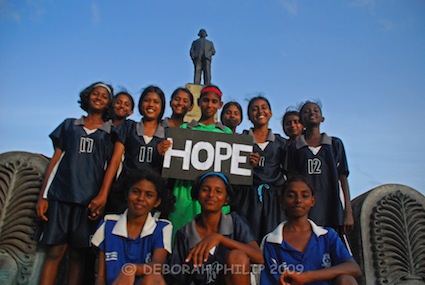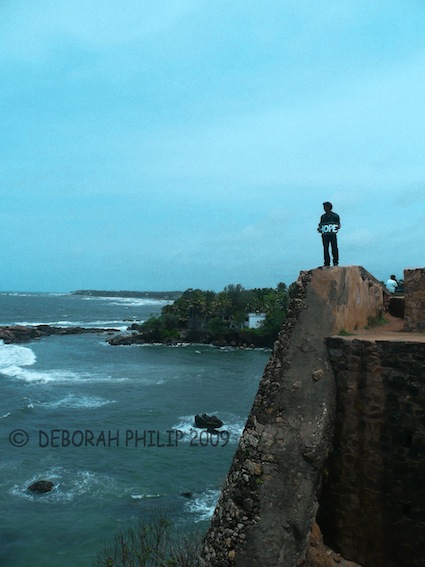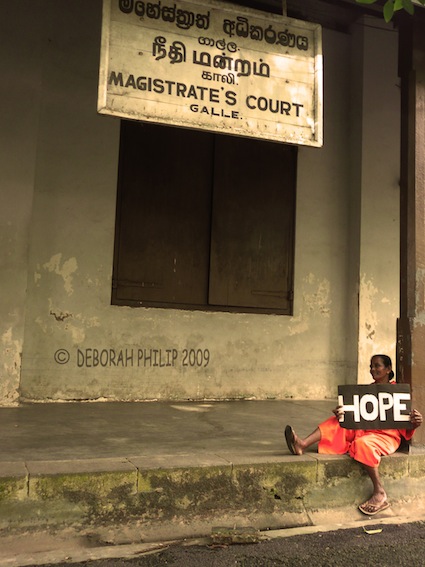

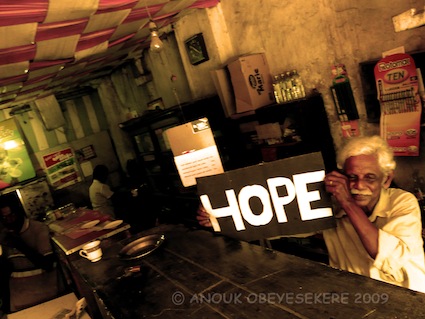
“Where is the hope?” is a question that the writer encountered quite a few times when she asked people to pose with the HOPE board. The culture of impunity prevalent in post-war Sri Lanka paints a rather depressing picture of a country that has lost the ability to hope. Human rights continue to be violated, there is an upsurge in criminal activity, media freedom is severely restricted and nationalist rhetoric continues to be the theme of those in the highest echelons of power. Hope has been replaced with a sense of hopelessness and apathy that has gripped society. In order for positive change to take place the nation needs to regain their ability to believe in the power of hope.
The Hope board was influenced by the statement of St. Paul in Romans, when he says “hope that is seen is not hope. For who hopes for what he already sees. But if we hope for what we do not see, with perseverance we wait eagerly for it”. In essence hope is not about seeing life as it is but as it should be, and then taking up the challenge to work towards making the image a reality.
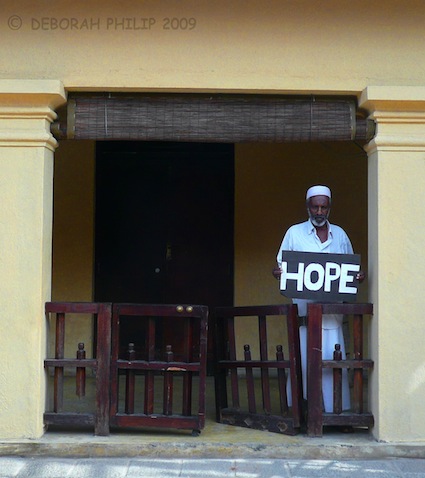
As the HOPE board traveled and continues to travel from hand to hand and from place to place, it has come across people from diverse backgrounds with different ideas about what the future holds for them. Each of them is symbolic of Sri Lanka’s elusive search for hope.Sri Lanka is at a point where society at large needs that assurance that better times are ahead, be you Sinhalese or Tamil, Muslim or Burgher. It is time for the country as a whole to renounce the widespread culture of violence and start focusing on being change agents. The Chinese writer, Lin Yutang draws an intuitive image of hope when he says “Hope is like a road in the country; there was never a road, but when many people walk on it, the road comes into existence.”