A-Z of Sri Lankan English: Z is for Z-score and zipperman
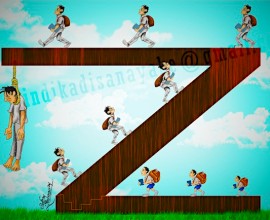
Image via Sri Lanka Guardian There are only two Z-words that I have come across in SLE: Z-score and zipperman. Both are terms which are found in standard English, but which have…

Image via Sri Lanka Guardian There are only two Z-words that I have come across in SLE: Z-score and zipperman. Both are terms which are found in standard English, but which have…

Image from Neato Shop Many languages have singular and plural forms of the second person pronoun you, including Sinhala and Tamil. English doesn’t, except in certain dialects: yous or youse is heard…

Will and would have a habit of changing places in Sri Lankan English. Sometimes (“I knew the car will be there”), and sometimes it’s the other way round (“We would inform you…
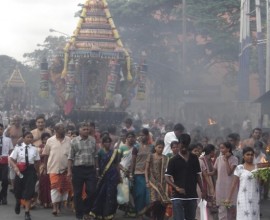
A Hindu vel festival is better described in pictures than words. The photos here were taken a few years ago at the annual festival on Havelock Road, on a rainy August morning……
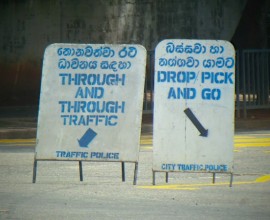
The verb cope up is one which divides opinion: is it acceptable Sri Lankan English, or simply an error? It is certainly commonly used in SLE (“He’s finding it hard to cope…
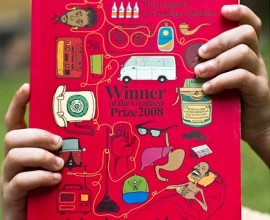
Original photo by Deshan Tennekoon What do you call something whose name you don’t know or can’t remember, or which you prefer to avoid naming for whatever reason? A whatsit or a…
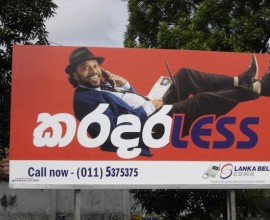
Singlish is the term used to describe the mixture of Sinhala and English which is frequently used by bilingual speakers. But Singapore got there first: Singlish is generally accepted as referring to…
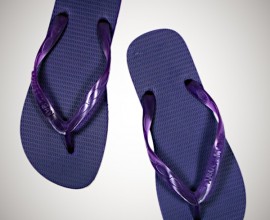
Image courtesy Odel They’re called . Here in Sri Lanka they’re most commonly referred to as rubber slippers; also bathroom slippers, and Bata slippers (or Batas). And some of us like to…
Equality before the law? I’m no lawyer, but I have always wondered how this fundamental principle is possible in a country with several different legal systems operating alongside one another. The main…
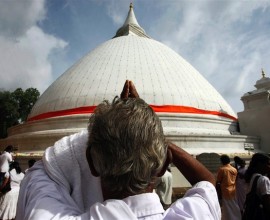
Photo courtesy M.A. Pushpa Kumara / EPA, via Photo Blog on MSNBC Poya must be one of the first Sri Lankan English terms to enter the vocabulary of foreigners when they arrive in…
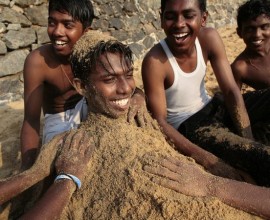
Boys will not always be boys! Photo credit: National Geographic The possessive pronoun “our” is deceptively simple. But who are the “we” that it refers to? The expression our people is a…
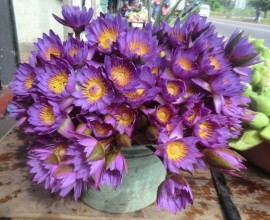
The national tree and the national flower were both in the news this year. In August the uprooting of the Indian willows lining Independence Avenue to be replaced by indigenous na trees…
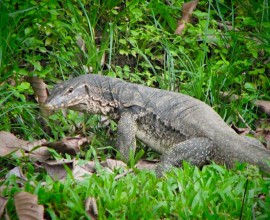
Sunimal Fernando, speaking from the audience at my presentation on Sri Lankan English at the recent conference on Language and Social Cohesion (Colombo, 17-19 October), confirmed my own conclusion, that while the…
The A-Z of Sri Lankan English is back after a break. These short pieces focus on different aspects of the way English is used in Sri Lanka. Collectively they provide a cross-section…
I normally try to stay on the right side of the descriptive-prescriptive divide, but today I’ve got my prescriptive hat on. I deplore the habit of some writers, editors and publishers of…
